
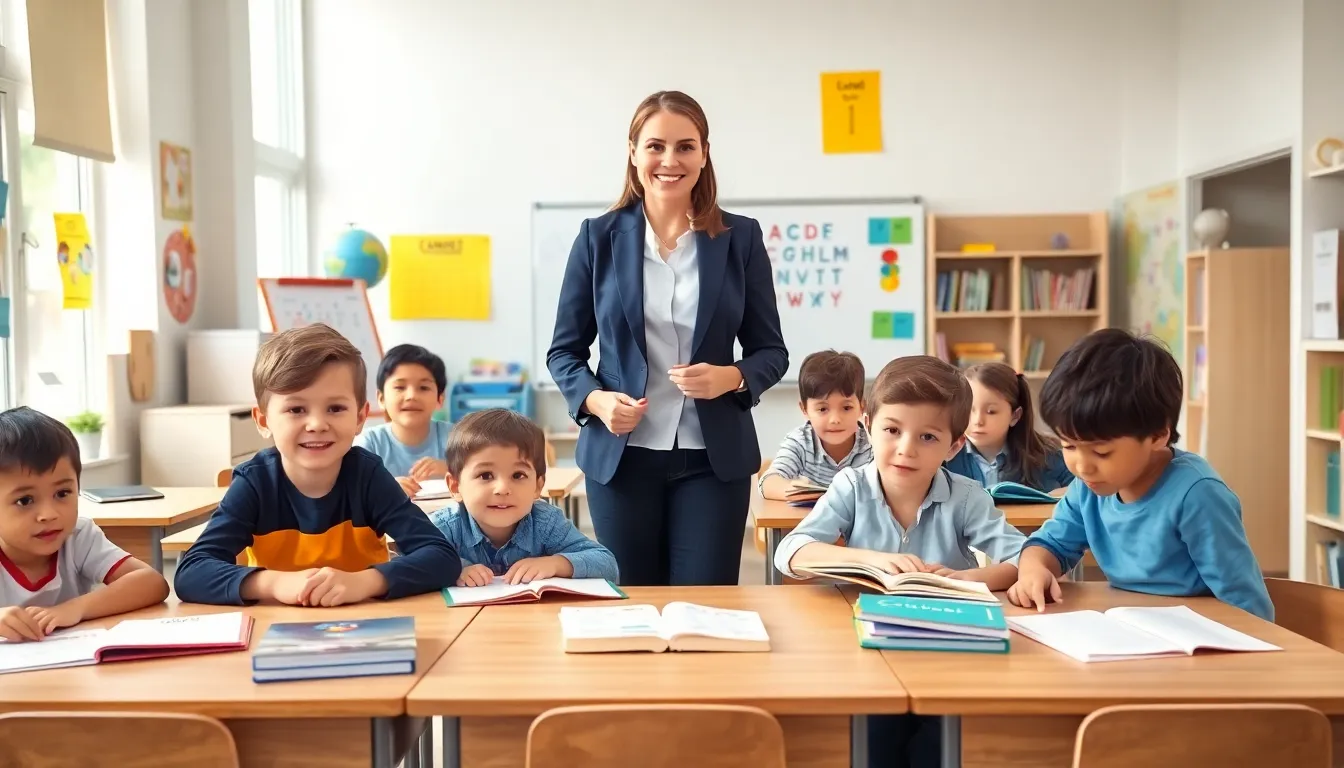
An elementary school guide helps parents understand what their child will experience during these foundational years. Elementary school covers kindergarten through fifth or sixth grade, depending on the district. Children typically enter at age five and graduate around age eleven or twelve.
This guide breaks down grade levels, core subjects, and practical ways to support a child’s success. Parents will also find tips for choosing the right school. Whether a family is preparing for kindergarten or transitioning between grades, this elementary school guide provides the essential information they need.
Table of Contents
ToggleKey Takeaways
- An elementary school guide helps parents navigate kindergarten through fifth or sixth grade, covering ages five to twelve.
- Core subjects include reading, math, science, and social studies, with skills building progressively each year.
- Daily reading at home, consistent homework routines, and strong teacher communication are essential for supporting your child’s success.
- When choosing an elementary school, consider class size, school culture, academic performance, and available special programs.
- Parents don’t need to be experts—staying involved and showing interest in learning makes a lasting difference.
What Is Elementary School?
Elementary school is the first stage of formal education in the United States. It serves as the foundation for all future learning. Students develop basic literacy, numeracy, and social skills during these years.
Most elementary schools include grades kindergarten through fifth grade. Some districts extend to sixth grade. The structure varies by state and school district, but the core purpose remains the same: prepare children for middle school and beyond.
Elementary school introduces students to classroom routines. They learn to follow schedules, work with peers, and complete assignments. These habits shape how children approach education for years to come.
Teachers at this level specialize in child development. They understand how young minds learn best. Small class sizes and hands-on activities help keep students engaged.
Grade Levels and Age Ranges
Elementary school typically spans six or seven grade levels. Here’s what parents can expect:
- Kindergarten (Ages 5–6): Children learn letters, numbers, colors, and basic social skills. Play-based learning is common.
- First Grade (Ages 6–7): Students start reading simple books and solving basic math problems.
- Second Grade (Ages 7–8): Reading fluency improves. Math includes addition and subtraction with larger numbers.
- Third Grade (Ages 8–9): Standardized testing often begins. Students read chapter books and learn multiplication.
- Fourth Grade (Ages 9–10): Writing becomes more structured. Science and social studies take on greater importance.
- Fifth Grade (Ages 10–11): Students prepare for middle school. They handle more independent work and complex projects.
- Sixth Grade (Ages 11–12): Some elementary schools include this grade. Others place it in middle school.
Age requirements vary slightly by state. Most require children to turn five by a specific cutoff date to start kindergarten. Parents should check their local district’s enrollment policies.
Core Subjects and Curriculum
Elementary school curriculum covers several core subjects. Each one builds skills students will use throughout their education.
Reading and Language Arts
Reading instruction starts with phonics and sight words. By third grade, students transition from learning to read to reading to learn. Writing assignments grow from simple sentences to multi-paragraph essays. Grammar and vocabulary expand each year.
Mathematics
Math instruction follows a clear progression. Kindergarteners count and recognize numbers. By fifth grade, students work with fractions, decimals, and basic geometry. Problem-solving skills receive heavy emphasis.
Science
Science introduces students to the natural world. Topics include weather, plants, animals, and simple physics concepts. Hands-on experiments make abstract ideas concrete.
Social Studies
Social studies covers history, geography, and civics. Students learn about their community, state, and country. Map skills and timeline reading are common activities.
Additional Subjects
Most elementary schools also offer art, music, and physical education. These subjects support creativity and physical health. Some schools provide library time, technology classes, or foreign language instruction.
Curriculum standards vary by state. The Common Core State Standards guide many schools, but each district adapts materials to local needs.
How to Support Your Child’s Success
Parents play a critical role in elementary school success. A few consistent habits make a significant difference.
Read together daily. Reading at home strengthens vocabulary and comprehension. Even after children can read independently, shared reading time builds connection and love of books.
Establish a assignments routine. Set a regular time and quiet space for assignments. Check assignments without doing the work for them. This teaches responsibility.
Communicate with teachers. Attend parent-teacher conferences. Email teachers with questions or concerns. Strong parent-teacher partnerships benefit students.
Encourage curiosity. Answer questions. Visit libraries and museums. Support interests outside the standard curriculum. Curious children become engaged learners.
Monitor screen time. Balance technology use with outdoor play and hands-on activities. Too much screen time can affect attention and sleep.
Prioritize sleep and nutrition. Well-rested, well-fed children focus better in class. Most elementary-aged children need nine to twelve hours of sleep per night.
Small, consistent efforts add up. Parents don’t need to be experts. They just need to stay involved and show interest in what their child is learning.
Choosing the Right Elementary School
Selecting an elementary school requires research and visits. Several factors matter when making this decision.
Location and convenience. Proximity to home affects daily logistics. Consider commute times and after-school care options.
Academic performance. Review test scores and school ratings. State education websites provide this data. But, numbers don’t tell the whole story.
Class size. Smaller classes often mean more individual attention. Ask about student-to-teacher ratios.
School culture. Visit during school hours. Observe how students and teachers interact. Does the environment feel welcoming and organized?
Special programs. Some schools offer gifted programs, special education services, or language immersion. Match the school’s offerings to your child’s needs.
Extracurricular activities. Look for after-school clubs, sports, or arts programs. These opportunities enrich the elementary experience.
Parent involvement. Schools that welcome parent volunteers often have stronger communities. Ask about PTA activities and volunteer opportunities.
Public, private, charter, and magnet schools each have pros and cons. Families should weigh their priorities and budget. Talking to other parents provides real-world insight. Trust your instincts after gathering information.


