
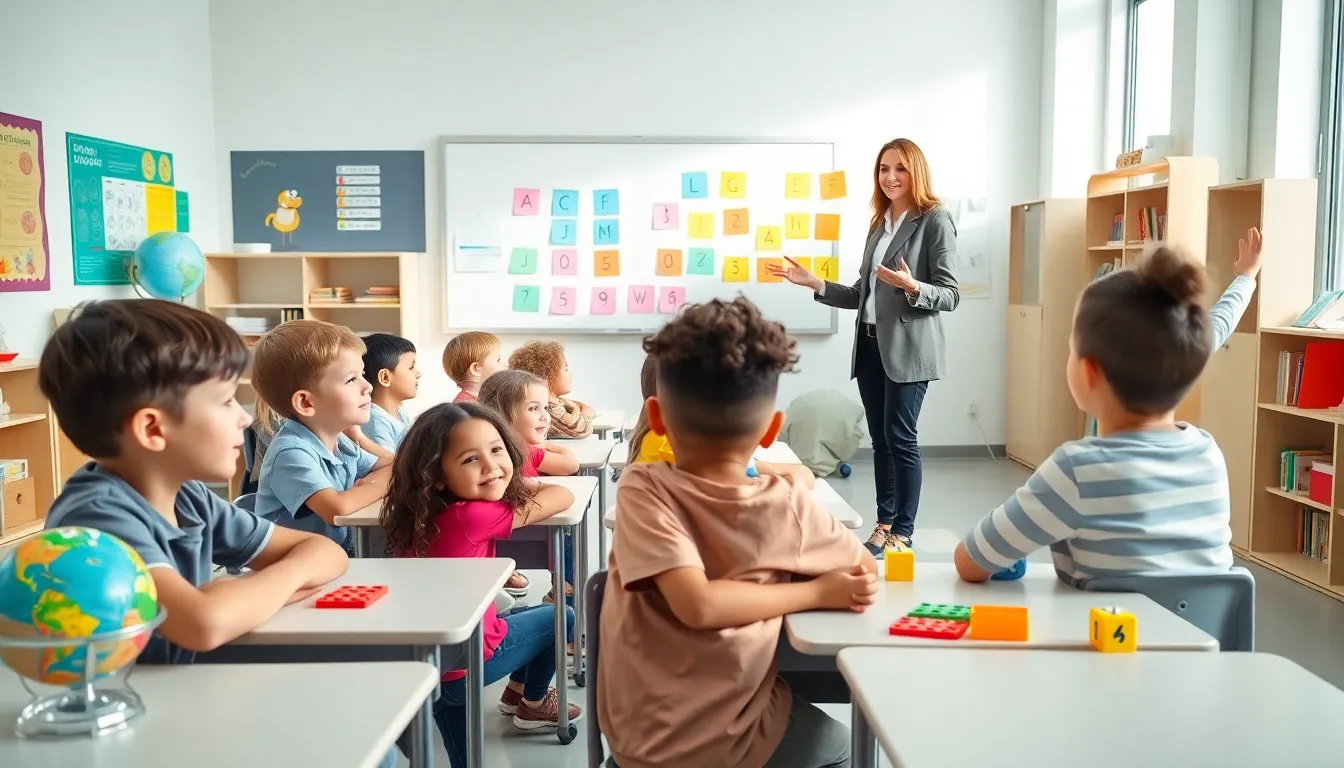
Elementary school examples offer a window into how young students learn, grow, and build foundational skills. These institutions serve children typically aged 5 to 11, covering kindergarten through fifth or sixth grade. Parents, educators, and researchers often seek concrete examples to understand what makes primary education effective. This guide breaks down the different types of elementary schools, their curricula, and what daily life looks like for students. Whether someone is choosing a school or simply curious about primary education, these examples provide clarity.
Table of Contents
ToggleKey Takeaways
- Elementary school examples include public schools, private institutions, charter schools, and specialized programs like Montessori and Waldorf.
- Core subjects at elementary schools focus on literacy, numeracy, science, and social studies, with specials like art, music, and physical education.
- A typical elementary school day features structured blocks for academics, at least one recess period, and dismissal between 2:30 and 4:00 PM.
- Class sizes in elementary schools usually range from 20 to 25 students, allowing teachers to provide individual attention.
- Public elementary schools serve about 90% of K-12 students and offer free education, special services, and standardized curricula.
- Many elementary school examples now integrate technology instruction, including basic coding through platforms like Scratch and Code.org.
What Defines an Elementary School
Elementary schools focus on foundational learning for young children. They typically serve students from kindergarten through fifth or sixth grade, depending on the district. The defining feature of an elementary school is its emphasis on core academic and social skills.
These schools prioritize literacy, numeracy, and basic science concepts. Students learn to read, write, and perform arithmetic operations. Social-emotional development also plays a central role, children learn to cooperate, share, and resolve conflicts.
Elementary school examples vary widely, but most share common traits. Classrooms usually have one primary teacher who instructs the same group of students throughout the day. This setup helps young learners build trust and consistency.
Class sizes in elementary schools tend to be smaller than those in middle or high schools. Many districts aim for 20 to 25 students per classroom. This ratio allows teachers to give individual attention to each child.
Another defining characteristic is the structured schedule. Elementary schools organize the day into blocks for reading, math, science, and specials like art or physical education. This structure helps children develop routines and time management skills early.
Types of Elementary Schools
Elementary school examples fall into several categories based on funding, governance, and educational philosophy. Understanding these types helps families make informed decisions.
Public Elementary Schools
Public elementary schools receive government funding and serve students within designated geographic boundaries. They follow state-mandated curricula and standards. Examples include neighborhood schools like Lincoln Elementary in Springfield, Illinois, or PS 234 in New York City.
Public schools are free to attend. They must accept all students regardless of academic ability or background. Most American children attend public elementary schools, roughly 90% of K-12 students enroll in public institutions.
These schools employ certified teachers and follow standardized testing requirements. They offer special education services, English language learner programs, and free or reduced-price lunch options.
Private and Charter Schools
Private elementary schools operate independently of government funding. They charge tuition and set their own admission standards. Examples include Montessori schools, Catholic parochial schools like St. Mary’s Elementary, and independent schools such as Sidwell Friends in Washington, D.C.
Private schools often feature smaller class sizes and specialized curricula. Religious schools incorporate faith-based instruction. Montessori and Waldorf schools use alternative teaching methods that emphasize self-directed learning and creativity.
Charter schools occupy a middle ground. They receive public funding but operate with more autonomy than traditional public schools. KIPP Academy and Success Academy are well-known charter school networks. These schools often focus on specific approaches, such as STEM education or college preparation.
Charter schools must meet performance standards to keep their charters. They typically use lottery systems for admission when demand exceeds capacity.
Core Subjects and Curriculum Examples
Elementary school examples share a common curricular foundation. Core subjects include English language arts, mathematics, science, and social studies. Most schools also offer specials like art, music, and physical education.
English language arts instruction covers reading, writing, speaking, and listening. First graders might learn phonics through programs like Fundations or Wilson Reading. By fifth grade, students analyze texts and write multi-paragraph essays.
Mathematics curricula progress from counting and basic operations to fractions, decimals, and introductory geometry. Popular programs include Everyday Mathematics, Eureka Math, and Singapore Math. These elementary school examples show the range of approaches districts adopt.
Science education introduces the scientific method. Students conduct simple experiments, growing plants, observing weather patterns, or testing magnets. Programs like FOSS (Full Option Science System) provide hands-on kits for classroom use.
Social studies covers community, geography, history, and civics. Second graders might study their local neighborhood. Fourth graders often learn state history. Fifth graders typically explore early American history and government.
Many elementary schools now integrate technology instruction. Students learn basic keyboarding, internet safety, and how to use educational software. Some schools introduce coding through platforms like Scratch or Code.org.
Specials provide balance to the academic day. Art classes teach drawing, painting, and sculpture. Music programs include singing, rhythm instruments, and sometimes recorder or ukulele. Physical education builds motor skills, fitness, and sportsmanship.
Daily Life in an Elementary School
A typical day at an elementary school follows a predictable pattern. This structure helps children feel secure and manage their time.
Most elementary schools start between 7:30 and 9:00 AM. Students arrive by bus, car, or on foot. Morning routines often include announcements, the Pledge of Allegiance, and attendance.
The morning block usually focuses on core academics. Many schools dedicate 90 minutes to literacy instruction. Teachers lead whole-class lessons, small-group reading sessions, and independent practice. Math instruction often follows, lasting 60 to 90 minutes.
Recess provides a mental break. Students play on playground equipment, run games like tag, or simply socialize. Research shows recess improves focus and academic performance. Most elementary school examples include at least one 15 to 20-minute recess period.
Lunch typically falls between 11:00 AM and 1:00 PM. Students eat in cafeterias and often have a second recess afterward. Lunchtime also builds social skills as children interact with peers.
Afternoons often include science, social studies, and specials. Students might rotate to different classrooms for art, music, or physical education. Some schools use this time for intervention groups or enrichment activities.
Dismissal happens between 2:30 and 4:00 PM. Students head to buses, parent pickup areas, or after-school programs. Many elementary schools offer extracurriculars like chess club, choir, or tutoring.
Assignments varies by grade and school philosophy. Some elementary schools assign nightly reading. Others send home worksheets or projects. Research suggests keeping assignments brief for young students, about 10 minutes per grade level.


