
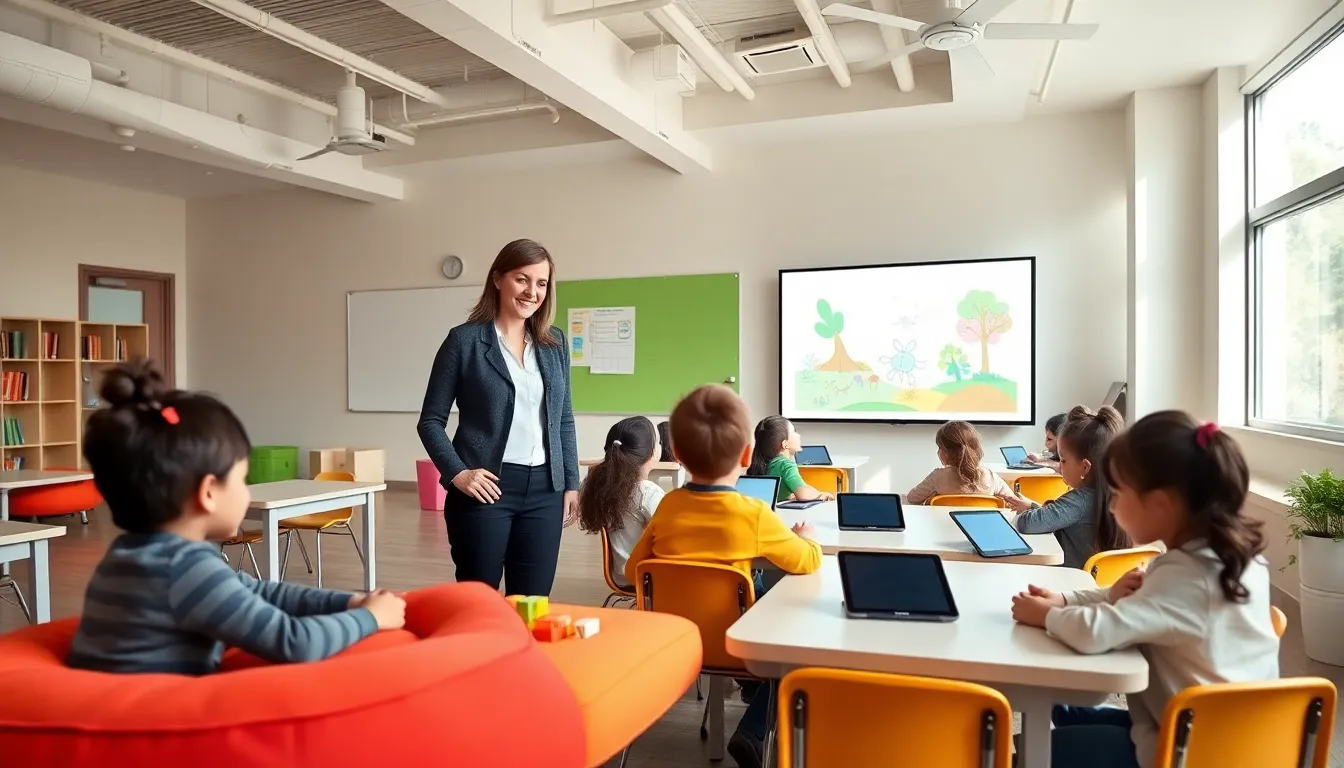
Elementary school trends 2026 are reshaping how children learn, play, and grow. From smarter classroom technology to a stronger focus on emotional well-being, schools are adapting fast. Parents and educators alike want to understand what’s coming, and how these changes will affect young learners.
This year brings significant shifts in teaching methods, learning spaces, and curriculum priorities. Some trends build on changes that started during the pandemic. Others reflect new research about how children learn best. Whether you’re a parent preparing your child for school or an educator planning next year’s lessons, these elementary school trends 2026 deserve your attention.
Table of Contents
ToggleKey Takeaways
- Elementary school trends 2026 prioritize AI-powered adaptive learning tools that personalize instruction and identify learning gaps in real time.
- Social-emotional learning (SEL) now holds equal importance to academics, helping children manage emotions, build relationships, and boost resilience.
- Flexible classroom designs with movable furniture and collaboration zones replace traditional desk rows to support different learning styles.
- Outdoor and nature-based education reduces stress, improves attention, and enhances retention—making it a growing instructional strategy.
- Evidence-based literacy and math instruction, including structured phonics and conceptual math understanding, are driving stronger student outcomes.
- Parents can reinforce these elementary school trends 2026 at home through emotional check-ins, nature activities, and supporting personalized learning.
Technology Integration in the Classroom
Technology in elementary schools has moved far beyond computer labs and occasional tablet time. In 2026, schools are embedding digital tools directly into daily instruction.
Artificial intelligence now helps teachers identify learning gaps in real time. Adaptive learning platforms adjust lesson difficulty based on each student’s progress. If a second-grader struggles with subtraction, the software provides extra practice problems before moving forward.
Interactive whiteboards and educational apps make abstract concepts concrete. A third-grade science lesson might include a virtual tour of the solar system. Students can zoom in on Mars or watch how planets orbit the sun.
But here’s what matters most: technology serves the lesson, not the other way around. The best elementary school trends 2026 shows us involve teachers using tech strategically, not just for its own sake. Screen time limits remain important, and many schools balance digital learning with hands-on activities.
Coding and digital literacy also appear earlier in curricula. Students learn basic programming concepts through games and puzzles. They practice online safety skills and learn to evaluate information sources. These skills prepare children for a world where technology touches nearly everything.
Social-Emotional Learning Takes Center Stage
Social-emotional learning (SEL) has become a cornerstone of elementary education in 2026. Schools now treat emotional intelligence with the same importance as reading and math.
Why the shift? Research consistently shows that children who manage emotions, build relationships, and make responsible decisions perform better academically. They also experience fewer behavioral problems and show greater resilience.
Modern SEL programs teach specific skills. Students learn to name their feelings, practice calming techniques, and resolve conflicts peacefully. Morning meetings might include check-ins where children share how they’re doing. Classroom discussions address topics like empathy, kindness, and handling frustration.
Many elementary school trends 2026 reflect a post-pandemic reality. Children experienced disruption, isolation, and anxiety during school closures. Schools now prioritize mental health support and connection-building activities.
Counseling services have expanded. Some schools employ full-time social workers or partner with community mental health organizations. Teachers receive training to recognize signs of anxiety or depression in young children.
Parents can reinforce these skills at home. Ask children about their day with specific questions: “What made you feel proud today?” or “Did anything frustrate you?” These conversations build emotional vocabulary and strengthen family bonds.
Flexible and Personalized Learning Environments
The traditional classroom, rows of desks facing a chalkboard, is fading fast. Elementary school trends 2026 emphasize flexible spaces that adapt to different learning activities.
Classrooms now feature movable furniture, reading nooks, and collaboration zones. Students might work at standing desks, bean bag chairs, or floor cushions depending on the task. Teachers can quickly reconfigure the room for group projects, individual work, or whole-class instruction.
Personalized learning goes beyond physical space. Schools increasingly recognize that children learn at different paces and in different ways. Some students grasp concepts quickly and need enrichment activities. Others require more time and support.
Learning management systems track individual progress and suggest appropriate next steps. Teachers use this data to group students strategically and differentiate instruction. A single math class might include three different activities at varying difficulty levels.
Project-based learning has gained traction too. Instead of isolated worksheets, students tackle real-world problems. A unit on community might involve interviewing local business owners, creating maps, and presenting findings to parents.
These elementary school trends 2026 require teacher flexibility and planning. But the payoff shows in student engagement. Children take more ownership of their learning when they have choices and see connections to their lives.
Outdoor and Nature-Based Education
Getting kids outside isn’t just about recess anymore. Outdoor education has become a serious instructional strategy in elementary school trends 2026.
Research supports this movement. Studies show that time in nature reduces stress, improves attention, and boosts physical health. Children who learn outdoors often retain information better than those stuck inside all day.
Schools are creating outdoor classrooms with seating areas, garden beds, and weather stations. Science lessons happen among trees and plants. Math might involve measuring garden plots or counting bird species. Even writing improves when students can describe what they see, hear, and smell outside.
Some districts have adopted “forest school” models borrowed from Scandinavian countries. These programs immerse children in nature for extended periods. Students build shelters, identify plants, and develop problem-solving skills through unstructured outdoor play.
Nature-based education also supports physical activity. Many elementary students don’t get enough movement during the school day. Outdoor learning naturally incorporates walking, exploring, and hands-on activity.
Parents can extend this trend at home. Weekend hikes, backyard explorations, and nature journals reinforce what children learn at school. Even city families can visit parks, observe birds, or grow plants on a windowsill.
Updated Approaches to Literacy and Math Instruction
Reading and math instruction are evolving based on new research. Elementary school trends 2026 reflect a return to evidence-based methods, sometimes called “the science of reading” and “the science of math.”
For literacy, phonics instruction has made a strong comeback. Many schools now use structured literacy programs that explicitly teach letter-sound relationships. Children learn to decode words systematically rather than guessing from pictures or context.
This shift addresses years of disappointing reading scores. When students master phonics foundations, they become more confident readers. Comprehension improves because less mental energy goes toward figuring out individual words.
Math instruction emphasizes conceptual understanding alongside procedural fluency. Students don’t just memorize multiplication facts, they understand why multiplication works. Visual models, manipulatives, and number talks help children see math relationships.
Problem-solving takes priority over rote calculation. Students learn multiple strategies for approaching word problems. They explain their thinking and evaluate different solution paths.
Assessment methods have changed too. Teachers use frequent, low-stakes checks to monitor understanding. They catch misconceptions early rather than waiting for end-of-unit tests.
These elementary school trends 2026 demand quality curriculum materials and ongoing teacher training. Schools investing in both see the strongest results.


