
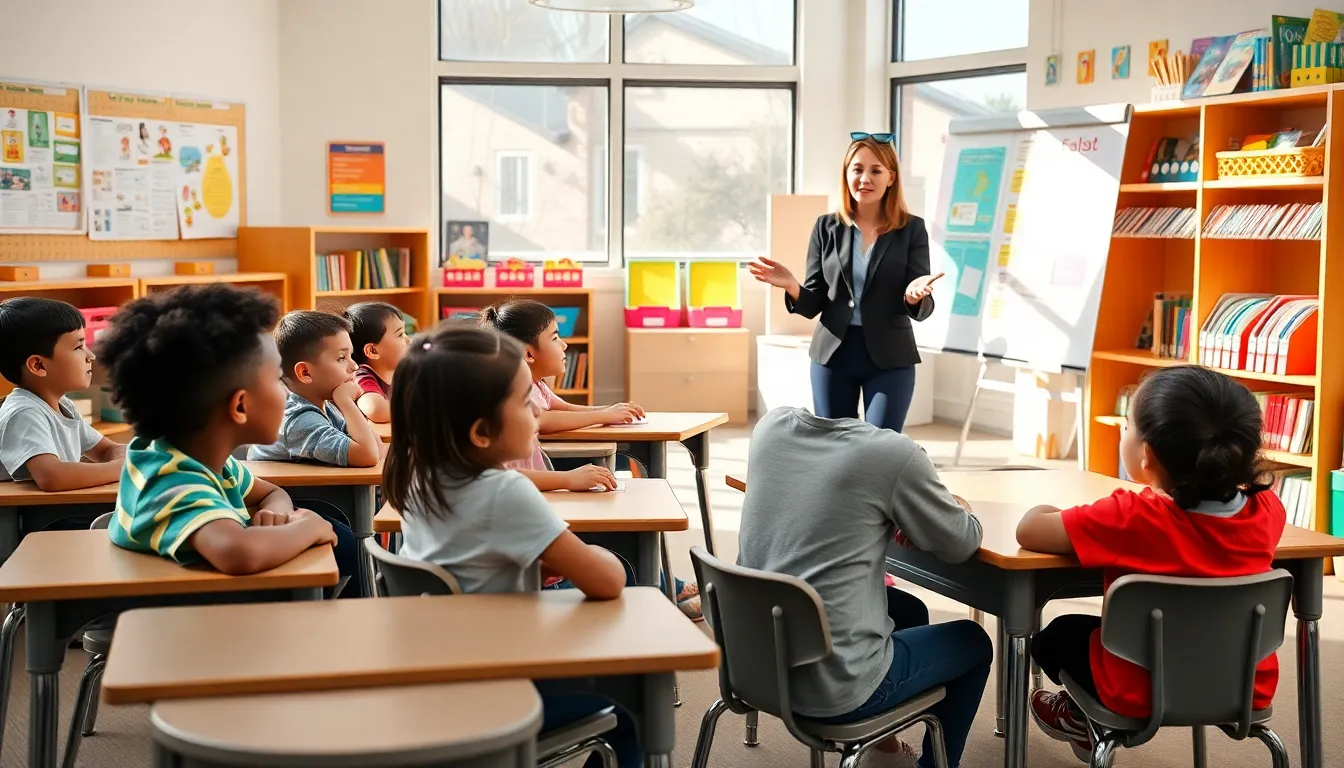
Elementary school marks a major milestone in every child’s education. It’s where students build the foundation for reading, writing, math, and social skills that will serve them for years to come. For parents, understanding what happens during these critical years can make a real difference in how well their child thrives.
This guide covers everything parents and students need to know about elementary school. From grade levels and curriculum to the people who make it all work, you’ll find practical information to help your family prepare for, and succeed in, these important years.
Table of Contents
ToggleKey Takeaways
- Elementary school spans kindergarten through fifth or sixth grade (ages 5–11) and builds the foundation for reading, writing, math, and social skills.
- Core subjects include language arts, mathematics, science, and social studies, with specials like art, music, and physical education supporting well-rounded development.
- Public elementary schools are free and funded by taxes, while private and charter schools offer alternative options with different structures.
- Parents can boost their child’s success by establishing routines, reading together daily, and staying actively involved in school events.
- Strong teacher-student relationships and open parent-teacher communication are essential for helping children thrive academically and socially.
- Kindergarten entry age cutoffs vary by state, so check your local district’s requirements before enrollment.
What Is Elementary School?
Elementary school is the first stage of formal education in the United States. Most children attend elementary school between the ages of 5 and 11. This period typically spans kindergarten through fifth or sixth grade, depending on the school district.
The primary goal of elementary school is to teach fundamental academic skills. Students learn to read, write, and perform basic math operations. They also develop social skills by interacting with peers and adults outside their family.
Elementary schools operate as standalone buildings in most communities. Some districts combine elementary and middle school grades into a single campus. Class sizes usually range from 20 to 30 students, with one primary teacher per classroom.
Public elementary schools are free and funded by local, state, and federal taxes. Private elementary schools charge tuition and may offer religious instruction or specialized teaching methods. Charter schools provide another option, they’re publicly funded but operate independently from traditional district oversight.
Attendance at elementary school is mandatory in all 50 states. Compulsory education laws require children to begin school by age 6 or 7 in most states. Homeschooling remains a legal alternative, though parents must follow state regulations.
Grade Levels and Age Ranges
Elementary school grade levels follow a predictable structure across the country. Here’s what parents can expect:
- Kindergarten (Ages 5–6): Students learn letter recognition, basic counting, and classroom behavior. Many kindergarten programs are half-day, though full-day kindergarten is increasingly common.
- First Grade (Ages 6–7): Reading instruction intensifies. Students begin writing sentences and solving simple addition and subtraction problems.
- Second Grade (Ages 7–8): Children expand their reading comprehension and start learning multiplication concepts. Writing becomes more structured.
- Third Grade (Ages 8–9): This year often includes the first standardized tests. Students read chapter books and tackle multi-digit math problems.
- Fourth Grade (Ages 9–10): Curriculum grows more challenging. Students write multi-paragraph essays and study fractions and decimals.
- Fifth Grade (Ages 10–11): Many elementary schools end here. Students prepare for middle school with more independent work and complex subject matter.
- Sixth Grade (Ages 11–12): Some districts include sixth grade in elementary school rather than middle school.
Age cutoffs for kindergarten entry vary by state. Most require children to turn 5 by September 1, though dates range from August to January. Parents should check their local district’s requirements before enrollment.
Core Subjects and Curriculum
Elementary school curriculum focuses on building strong foundations in core academic areas. Every state sets learning standards that guide what students should master at each grade level.
Reading and Language Arts
Reading instruction dominates the early elementary years. Students progress from phonics and sight words to fluent reading and comprehension. Writing skills develop alongside reading, children learn handwriting, spelling, grammar, and composition. By fifth grade, most students can write organized essays and read grade-level texts independently.
Mathematics
Math instruction at the elementary school level covers number sense, operations, geometry, and measurement. Young students count, add, and subtract. Older students work with fractions, decimals, and basic algebra concepts. Word problems help children apply math skills to real situations.
Science
Science education introduces students to life science, earth science, and physical science. Hands-on experiments are common. Students learn about plants, animals, weather, the solar system, and simple machines. The goal is building curiosity and scientific thinking skills.
Social Studies
Social studies covers history, geography, civics, and economics at an age-appropriate level. Students learn about their community, state, and country. They study maps, timelines, and important historical figures. Civics lessons teach how government works and why citizens have responsibilities.
Specials and Electives
Most elementary schools offer art, music, and physical education. These “specials” rotate throughout the week. Some schools add computer classes, foreign language instruction, or library time. These subjects support well-rounded development beyond core academics.
The Role of Teachers and Staff
Teachers serve as the heart of every elementary school. A typical elementary teacher holds a bachelor’s degree in education and state teaching certification. Many earn master’s degrees or additional endorsements in reading, special education, or other specialties.
Classroom teachers handle most instruction in elementary school. They teach multiple subjects to the same group of students throughout the day. This structure allows teachers to know each child’s strengths, challenges, and personality. Strong teacher-student relationships improve learning outcomes.
Specialist teachers handle subjects like art, music, physical education, and sometimes science or technology. These teachers see students from multiple classrooms, often for 30 to 60 minutes per week.
Support staff play essential roles too. School counselors help students with social and emotional issues. They also assist with academic planning and conflict resolution. Special education teachers and aides work with students who have individualized education programs (IEPs). Paraprofessionals provide classroom assistance and may supervise lunch or recess.
Principals lead elementary schools. They manage staff, handle discipline, communicate with parents, and set the school’s tone. Assistant principals, office staff, custodians, and cafeteria workers keep daily operations running smoothly.
Parent-teacher communication happens through conferences, emails, apps, and newsletters. Most elementary schools hold conferences twice per year. Parents should feel comfortable reaching out to teachers with questions or concerns at any time.
How to Support Your Child’s Success
Parents have significant influence over their child’s elementary school experience. A few key habits can make a big difference.
Establish routines. Consistent bedtimes, morning schedules, and assignments times help children feel secure and prepared. Kids need 9 to 12 hours of sleep per night at this age. A predictable routine reduces stress for the whole family.
Read together daily. Reading with your child, or listening to them read, builds vocabulary, comprehension, and a love of books. Even 15 minutes per day adds up. Visit the library regularly and let children choose books that interest them.
Stay involved with school. Attend parent-teacher conferences, back-to-school nights, and school events. Volunteer if your schedule allows. Children perform better academically when they see their parents value education.
Create a assignments space. Set up a quiet, well-lit area for schoolwork. Keep supplies organized and minimize distractions. Be available to answer questions, but let your child do the work independently.
Communicate openly. Ask specific questions about your child’s day. “What was the best part of lunch?” works better than “How was school?” Listen without judgment and address concerns early.
Support social development. Elementary school friendships matter. Arrange playdates, encourage extracurricular activities, and help your child practice conflict resolution skills. Social success affects academic performance.
Partner with teachers. Share relevant information about your child’s learning style, challenges, or home circumstances. Teachers appreciate parents who communicate respectfully and work as partners.


