
Crafts & DIY for kids tips can transform a rainy afternoon into hours of creative fun. Children learn through hands-on activities. They develop fine motor skills, boost confidence, and express themselves through art. The best part? Getting started doesn’t require expensive supplies or professional expertise.
This guide covers everything parents and caregivers need to know. From setting up a dedicated craft space to choosing the right materials, these practical tips make creative play accessible for families. Whether a child is three or thirteen, there’s a project here that will spark their imagination.
Table of Contents
ToggleKey Takeaways
- Crafts & DIY for kids don’t require expensive supplies—recyclables like cardboard tubes and egg cartons fuel creative projects for free.
- Set up a dedicated craft space with wipeable surfaces, organized supplies at kid-height, and good lighting to make creative play easier.
- Match materials to your child’s age, from chunky crayons for toddlers to hot glue guns (supervised) for tweens, to keep projects safe and frustration-free.
- Keep kids engaged by offering limited choices, working in stages, and joining in occasionally rather than overwhelming them with options.
- Let children lead their crafts & DIY for kids projects—ask open-ended questions, avoid taking over, and celebrate effort over the final outcome.
- Display finished artwork on a gallery wall or fridge to build confidence and show kids their creativity is valued.
Setting Up A Kid-Friendly Craft Space
A dedicated craft space makes creative projects easier to manage. It doesn’t need to be elaborate, a corner of the kitchen table or a small desk works fine.
Choose the right surface. Hard, wipeable surfaces are ideal for crafts & DIY for kids activities. Plastic tablecloths or old shower curtains protect tables from paint and glue spills. Some families keep a roll of butcher paper handy to cover work areas quickly.
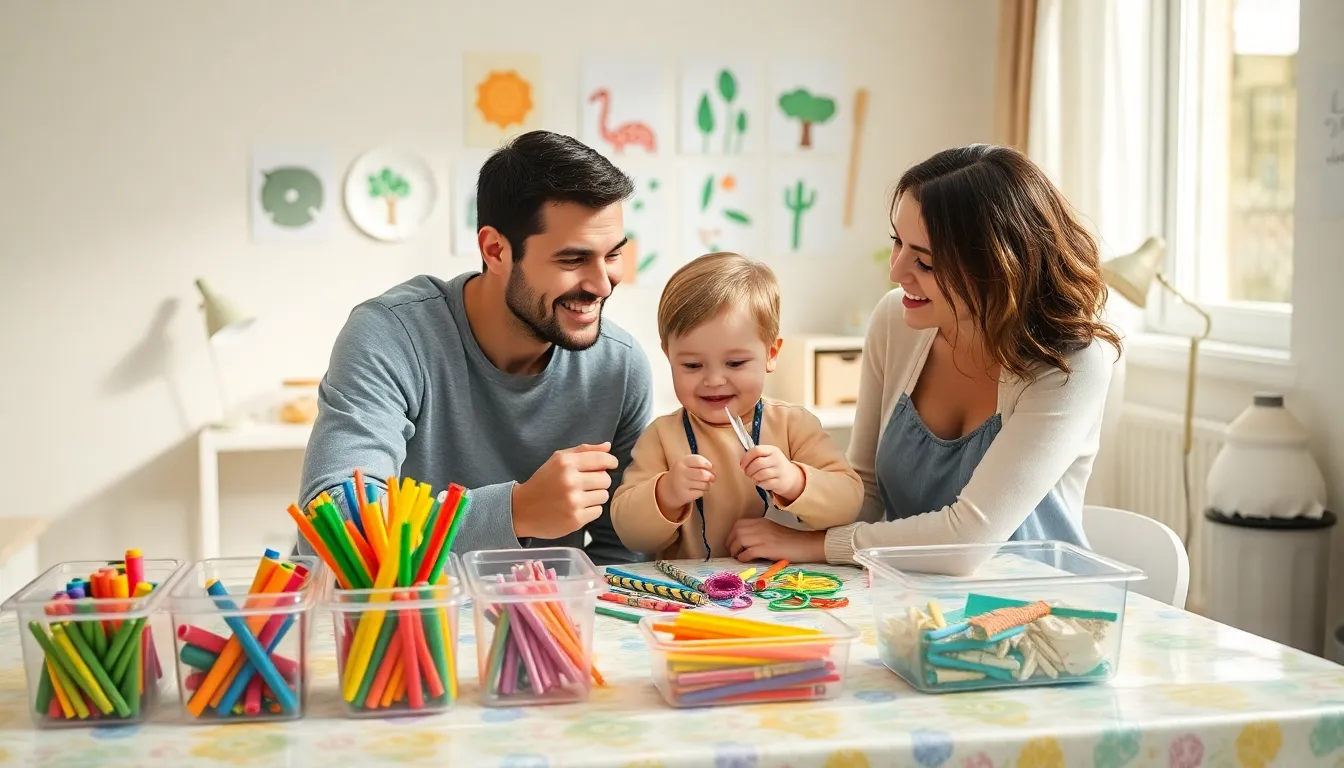
Organize supplies within reach. Clear plastic bins let kids see what’s available. Label containers with pictures for younger children who can’t read yet. Store frequently used items like crayons, scissors, and tape at kid-height so children can access them independently.
Good lighting matters. Natural light is best for crafting. Position the workspace near a window when possible. A simple desk lamp helps during evening craft sessions.
Keep cleanup supplies close. Wet wipes, paper towels, and a small trash bin should stay within arm’s reach. This encourages kids to clean as they go.
Age-Appropriate Materials And Supplies
Matching materials to a child’s age prevents frustration and keeps crafts & DIY for kids safe.
Toddlers (Ages 2-3)
Stick to non-toxic, washable options. Large crayons, finger paints, and chunky stamps work well for small hands. Avoid small items that pose choking hazards. Glue sticks are safer than liquid glue at this age.
Preschoolers (Ages 4-5)
Children in this age group can handle safety scissors with rounded tips. Introduce watercolor paints, play dough, and simple stickers. They’re ready for projects with two or three steps.
Early Elementary (Ages 6-8)
Kids can now use regular scissors and liquid glue. Add beads, pipe cleaners, and felt to the supply list. They can follow basic instructions and complete multi-step projects.
Tweens (Ages 9-12)
Older kids are ready for more advanced crafts & DIY for kids projects. Hot glue guns (with supervision), sewing needles, and craft knives become options. They can plan and execute their own project ideas.
Budget tip: Save recyclables like cardboard tubes, egg cartons, and plastic bottles. These free materials fuel countless creative projects.
Simple Project Ideas To Get Started
Starting with easy projects builds confidence. Here are several crafts & DIY for kids ideas organized by difficulty.
Paper Plate Animals
Paper plates transform into lions, fish, or owls with paint and construction paper. Kids cut out ears, fins, or feathers and glue them to painted plates. This project takes about 20 minutes.
Painted Rock Creatures
Smooth rocks become ladybugs, monsters, or pet rocks with acrylic paint. Seal finished rocks with clear nail polish to protect the design. These make great gifts or garden decorations.
Cardboard Box Creations
A large cardboard box becomes a spaceship, castle, or race car. Children draw windows, cut doors (with adult help for younger kids), and decorate with markers or paint.
Nature Collages
Gather leaves, flowers, and twigs during a nature walk. Glue them onto cardstock to create art. Press flowers between book pages first for best results.
Homemade Playdough
Mix two cups flour, one cup salt, two tablespoons cream of tartar, two tablespoons vegetable oil, and two cups water. Cook over medium heat until it forms a ball. Add food coloring for variety.
These crafts & DIY for kids projects use common household items and require minimal setup.
Tips For Keeping Kids Engaged And Mess-Free
Messy crafts often discourage parents from saying yes to creative play. These strategies help manage the chaos.
Set expectations upfront. Explain the rules before starting. “Paint stays on the paper” and “We clean up when we’re done” are clear boundaries kids can follow.
Use smocks or old clothes. Oversized t-shirts from thrift stores make perfect art smocks. Dress kids in play clothes before starting messy crafts & DIY for kids activities.
Work in stages. Break longer projects into sessions. Painting happens one day: decorating happens the next. This keeps attention spans from running out and reduces overwhelm.
Offer choices, not unlimited options. Saying “Do you want to use blue or green paper?” works better than dumping out every supply. Too many choices overwhelm young children.
Play music. Background music creates a fun atmosphere and signals “craft time.” Let kids pick a playlist to build excitement.
Join in occasionally. Kids stay engaged longer when adults participate. Parents don’t need to make a masterpiece, just showing interest matters.
Accept imperfection. The goal is process, not product. A lopsided butterfly still teaches fine motor skills and creative thinking.
Encouraging Creativity And Independence
The best crafts & DIY for kids moments happen when children lead the way.
Ask open-ended questions. Instead of “That’s a nice house,” try “Tell me about your picture.” This invites kids to share their creative vision without judgment.
Avoid taking over. When a child struggles, offer guidance rather than doing it for them. “What if you tried holding the scissors this way?” teaches problem-solving.
Display their work. Hang finished projects on the fridge, create a gallery wall, or string artwork on a clothesline with mini clips. Seeing their art valued builds confidence.
Let them experiment. What happens when you mix red and blue? Can you build a tower with only tape? Open-ended exploration teaches more than following strict instructions.
Celebrate effort over outcome. Praise the work involved: “You spent a long time on that.” or “I love how you tried something new.” This builds resilience and a growth mindset.
Crafts & DIY for kids activities should feel like play, not schoolwork. When children have freedom to create, they develop skills that extend far beyond art projects.


